Deep conversations
People often judge visible behaviour before they understand the motive underneath it.
A Relationship Awareness Theory and SDI-based session at DO Lectures, giving people a practical way to understand motives, behaviour, overdone strengths and conflict without turning the room into a personality-type parlour game.

The DO Lectures is a gathering, learning platform and community built around useful ideas, human stories and the courage to do something with them.
The context
The work
People often judge visible behaviour before they understand the motive underneath it.
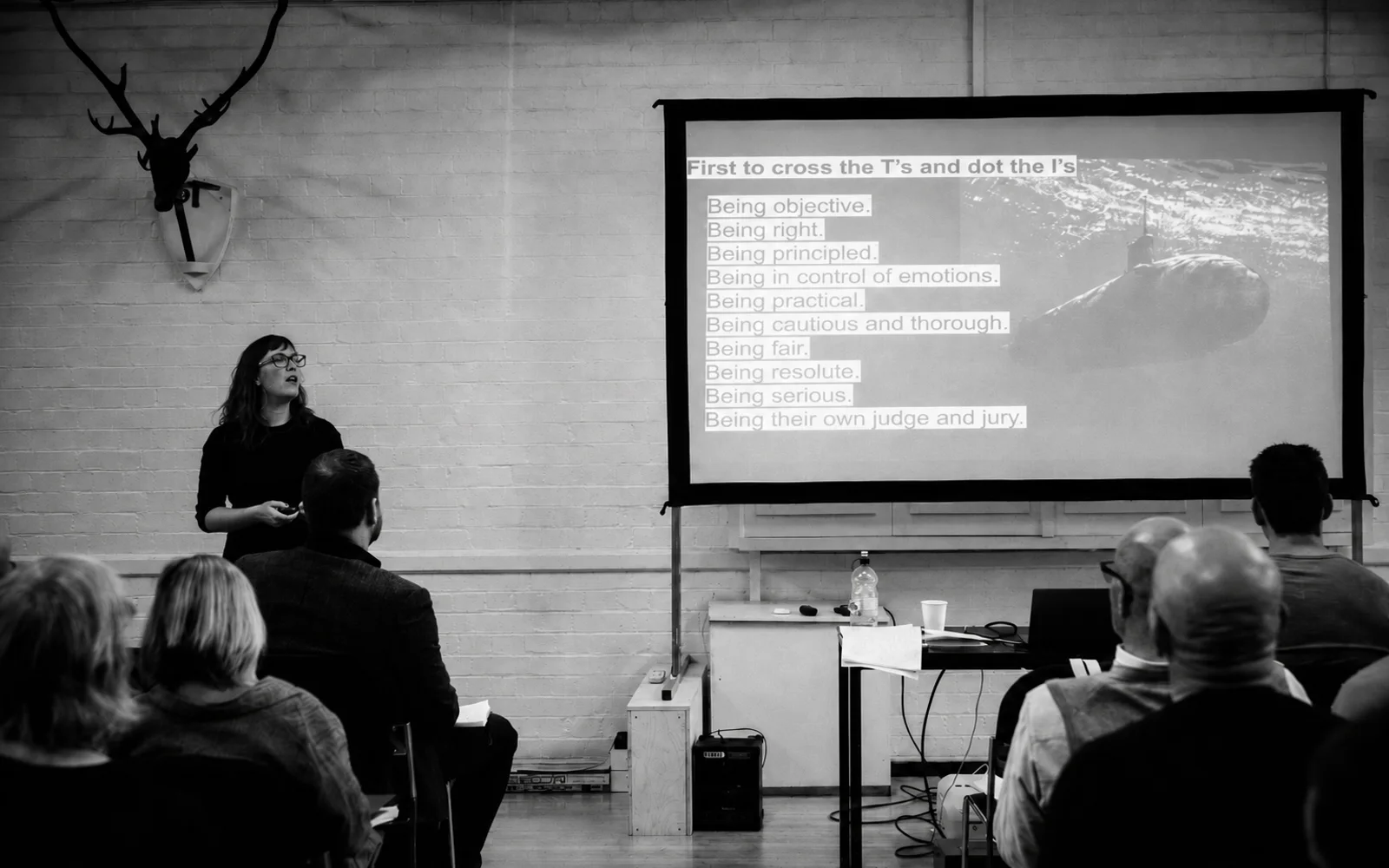
Kate built the session around two useful promises: get to know yourself and get to know others. Using Relationship Awareness Theory and Core Strengths SDI, she explored the difference between behaviour and motive, why strengths can become too much, how people protect different values under pressure, and why opposition can be productive while conflict usually signals a threat to something that matters.
Introduced the SDI lens of People, Performance, Process and Hub motives.

The outcome
“Know yourself to grow yourself. Be yourself, but with more skill.”
The impact
People are complex. Relationships do not need to be. The work is to tune in before deciding what someone else's behaviour means.
Delve deeper

01
Models
Most team tools help people describe how they behave. SDI, the Strength Deployment Inventory developed by Tim Overman and now published by Core Strengths, does something more specific: it helps people understand why they behave as they do, what motivates them at a deeper level, and crucially, what happens to their strengths when they feel threatened or when conflict enters the room.
02
Relationships
A practical guide to SDI Core Strengths, motivation, strengths, overdone strengths, conflict sequences and how relationship intelligence helps teams work better.

03
Psychology & Work
The gap between knowing something is broken and actually naming it out loud is one of the least examined spaces in professional life. It is also, right now, getting wider.