01 / Motives
What matters most
The values people are trying to protect, contribute or achieve when work is going well.
A practical guide to SDI Core Strengths, motivation, strengths, overdone strengths, conflict sequences and how relationship intelligence helps teams work better.
The idea in one line
SDI in practice
SDI works best when it moves quickly from profile recognition into live use: feedback, decision-making, repair, collaboration and the moments where people usually start judging intent.
01 / Motives
The values people are trying to protect, contribute or achieve when work is going well.
02 / Strengths
The behaviours people use to help the work, the relationship or the outcome.
03 / Overdone strengths
The same strengths, used too strongly or in the wrong context, creating friction.
04 / Conflict sequence
The pattern people may move through when they feel blocked, threatened or misunderstood.
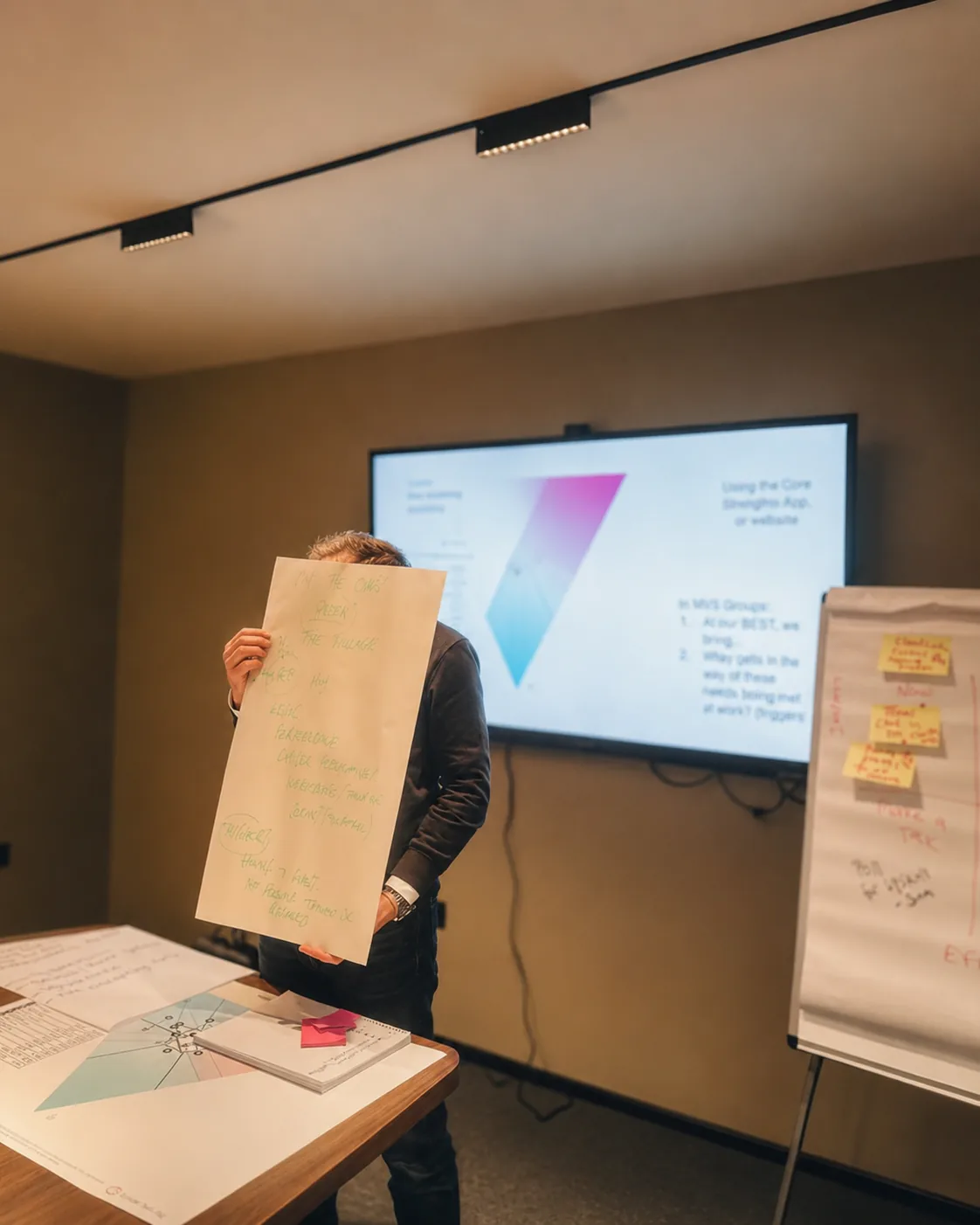

SDI Core Strengths is a relationship intelligence tool. It helps people understand what motivates them, which strengths they use most, what can happen when those strengths get overdone, and how behaviour can change when conflict or threat enters the room.
1. The real-world scenario
The point is not to put people in boxes. The point is to give people better language for motivation, behaviour and conflict, especially when good intentions are being misread.
Most team tools help people describe visible style. SDI goes underneath that. It asks what someone is trying to achieve, protect or contribute through their behaviour. That difference matters, because people often clash not because their intentions are bad, but because their motives are invisible to each other.
2. What may be happening
A Motivational Value System describes the motives or values that tend to drive someone when things are going well. Strengths are the behaviours someone uses to create value, help the work or support relationships. Overdone strengths are strengths used too much, too strongly or in the wrong context, so they start having the opposite effect. A conflict sequence is the pattern that can show up when someone feels blocked, threatened, misunderstood or in conflict.
The practical value is that SDI shows both sides of the relationship picture: what people are like when things are going well, and what may change when pressure, disagreement or misunderstanding enters the room.
3. Why it lands harder than expected
The SDI model is built around motivation rather than personality type. In simple terms, it looks at whether someone is primarily motivated by people and relationships, performance and results, process and careful thinking, or a blend of these.
In real work, that might look like one leader trying to protect trust, another trying to protect pace, and another trying to protect quality or risk management. Without a shared language, those motives can be misread as avoidance, impatience or obstruction. With a shared language, the team can ask a better question: what matters to this person right now, and how do we work with that rather than against it?
4. What actually helps
Strengths are useful behaviours. They are the things people bring when they are trying to help the work, the relationship or the outcome. The issue is that a strength can become too much of a good thing.
Caring can become rescuing. Analytical can become over-processing. Ambitious can become pushing. Flexible can become unclear. Principled can become rigid. Supportive can become avoiding challenge. SDI makes these patterns easier to discuss because the conversation starts from value, not blame.
5. What to try next
One of the most useful parts of SDI is the conflict sequence. It helps people see that conflict is not always a fixed style. Someone may start by trying to preserve the relationship, then shift into protecting the task, then withdraw or become more rigid if the conflict continues.
For teams, this is useful because it creates earlier warning signs. Instead of waiting until conflict is fully visible, people can notice the first signs of pressure and adapt the conversation before it becomes personal.
6. What to notice
It gives teams a shared language for motivation, trust, conflict, feedback, communication preferences, repair and different ways of working. That language can make hard conversations less blaming and more useful.
A senior team can use SDI before a strategy conversation to understand what each person is protecting. Managers can use it to adapt feedback. People teams can use it to build a common language across cohorts. Founders can use it to see why care, pace, standards and control are colliding under pressure.
7. What to practise
The work usually starts with the assessment. Participants complete the SDI Core Strengths profile, which takes around 20 to 30 minutes and produces a personalised report on motives, strengths and conflict patterns.
The value then comes from the facilitated conversation. In a workshop, people make sense of their own results, compare team patterns, explore real working relationships and practise using the language in situations that actually matter: feedback, decision-making, conflict, collaboration and repair.
For the work to stick, it needs follow-through. That might include leadership coaching, manager clinics, team prompts, check-ins or live use of the Core Strengths compare tool before important conversations.
8. How to keep it alive
Like any model, SDI becomes less useful if people use it as a label, excuse or shortcut. I'm just Blue or She's Red so she'll be like that misses the point. The useful question is: what matters to this person, what strength are they trying to use, and what might be happening under pressure?
9. A practical habit
Before reacting to someone's behaviour, ask: What might they be trying to protect, help or achieve? What strength might be overdone here? What would help us work with the motive rather than fight the behaviour?
That one shift can change the temperature of a conversation. It does not make the issue softer. It makes the route into the issue more intelligent.
If this pattern is showing up across a senior team, explore leadership team development.