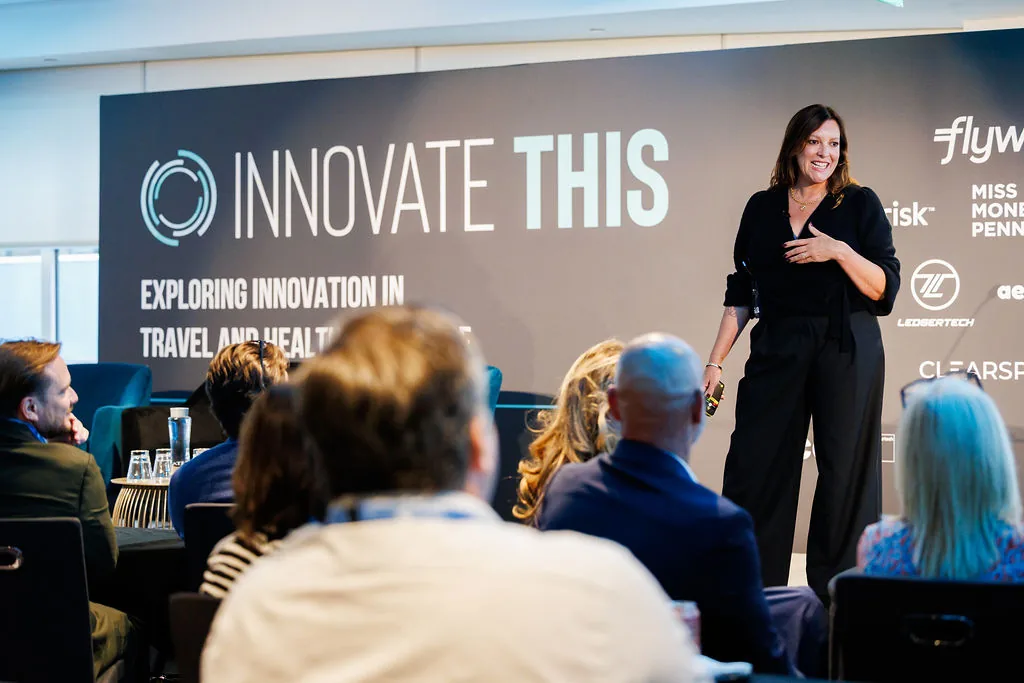
A few minutes before I was due to step on stage at Innovate This 2025 in London, my laptop refused to turn on. No warning, no gentle flicker of life, just a blank screen and a room filling with senior insurance professionals waiting for a session on resilience.
It was a small but very real test of the topic I was about to speak about. My heart rate rose, my inner dialogue became considerably noisier, and then something else happened. The IT team moved quickly, calmly and collaboratively, and within minutes the situation was rescued. The session went ahead as planned.
It was a timely reminder that resilience is rarely about heroic individual effort. More often, it is about habits, systems and the right support stepping in at exactly the right moment.
That experience framed everything that followed.
What the room told us
The audience was made up of professionals from across the UK insurance industry. Throughout the session we gathered live data on how people were feeling and coping right now, not in theory, not in retrospect, but in that room on that day.
When asked how resilient they felt, most described themselves as either a bit or very resilient, with a smaller but notable group saying their resilience could be better, and one person saying not at all. This was not a room in crisis. But it was not a room with much spare capacity either. It reflected something I recognise across many of the organisations I work with: a workforce that is functioning, delivering, and carrying a steady underlying load all at the same time.
"Resilience is rarely about heroic individual effort. More often, it is about habits, systems and the right support stepping in at exactly the right moment."
That load became clearer when people shared how they typically respond when things go wrong. The most common reaction was to look for fixes immediately, closely followed by replaying the event in detail. Far fewer people said they would talk it through with someone else. Almost nobody chose to push the issue aside or assign blame.
This points to a culture of responsibility and action, qualities rightly valued in insurance. But it also suggests that many people stay mentally engaged with problems long after the moment has passed. The mind remains switched on even when the body is tired.
Where the time is going
We looked at how people were spending their energy across the elements of a healthy mind. Focus time and connection time came out strongest. Lower down the list sat down time, sleep and reflective time.
In practical terms: people are concentrating, engaging and delivering. Rest and recovery are being squeezed. This is not a lack of awareness or good intention. It is a direct reflection of how modern work is structured and what it quietly rewards.
The invisible drags on leadership and performance confirmed this. Meeting overload, constant fire-fighting and always-on expectations featured most strongly. These are not abstract pressures. They show up in diaries filled with back-to-back calls, inboxes that never quite clear, and the low-level anxiety of feeling you should always be reachable.
The dilemmas people submitted gave this texture. People spoke about wanting to exercise but feeling too exhausted to start. Wanting more focus time but worrying about missing something important. Wanting rest that actually feels restful. Wanting to be more present with family without letting colleagues down. One participant raised something harder: the impact of toxic leadership behaviour on their capacity to cope at all.
Together these dilemmas read less like a list of personal complaints and more like a collective expression of capable, conscientious people trying to do the right thing in too many directions simultaneously.
What this means for leaders in insurance
I am not an expert in insurance products or regulation. I am an executive and leadership coach with 25 years of experience working across retail, insurance and service industries, and my expertise is in understanding how habits and behaviours form under pressure, and what it actually takes to help people find their way back.
Resilience has become a critical capability because the demands on attention, energy and emotional regulation have intensified significantly. In insurance, this is compounded by regulatory complexity, pace of change, and a deep professional sense of responsibility to get things right.
When resilience erodes, the risks extend well beyond burnout. They affect judgment, decision-making, the quality of relationships with colleagues and clients, and the creativity that good leadership requires.
What struck me most about the data from that room was not any single response, but the consistency running through all of them. Different questions, different formats, the same themes surfacing again and again. Time pressure. Constant availability. Difficulty switching off. A desire for better balance without any reduction in standards or commitment.
This is not about people lacking grit. It is about capable professionals operating in systems that were not designed to pause.
The thing worth taking away
The brief crisis with my laptop resolved quickly because there was support, clarity and shared purpose in the room. That is the lesson, really.
Resilience is not a personal failing to be addressed in isolation. It is a set of habits and conditions that can be shaped, individually and collectively, when leaders choose to treat it as seriously as any other performance variable.
The data from Innovate This offered a small but telling picture of working life today. The prompt it leaves behind is not simply how resilient are your people. It is what are they being asked to be resilient to, and for how long, before something is done about the conditions themselves.
Innovate This 2025 was a London event for senior professionals in the insurance industry, focused on innovation, resilience and the future of work in travel and health insurance.