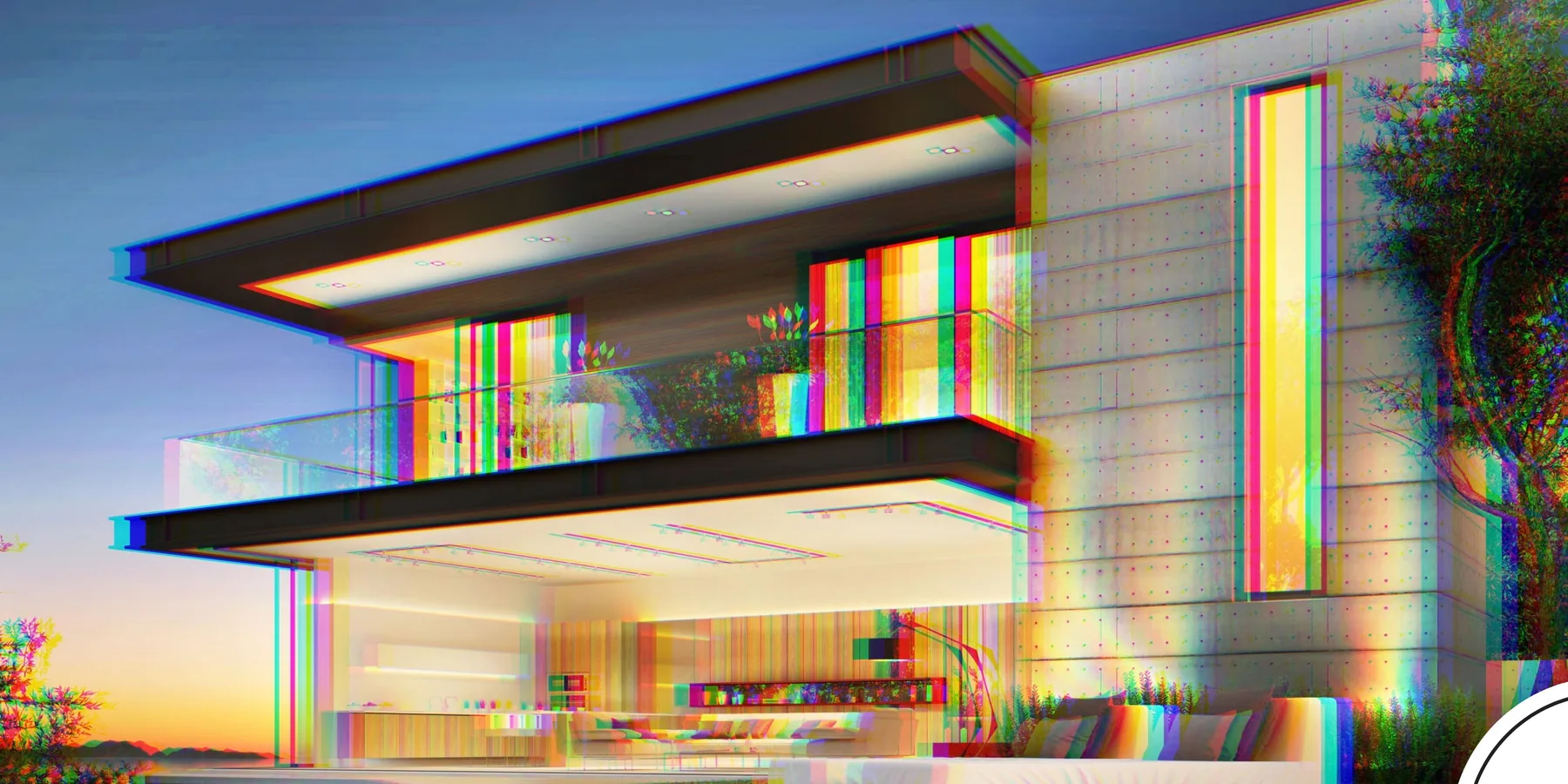
There is a house. It has five bedrooms and a sea view and the kind of kitchen island that signals to visitors that something has gone very right for someone. Omaze would like you to enter a draw to win it, proceeds to charity, tickets from a fiver. You watch the walkthrough video. And something happens in your brain that the National Lottery, with its thirty years and its scratch cards and its relentlessly upbeat jingle, has never quite managed to produce. You picture yourself there. Not in a vague, theoretical way. In a specific, morning-light, where-would-I-put-my-books way. For a moment, the house is yours.
That moment is the whole game. And it turns out there is a very good neurological explanation for why Omaze produces it and the lottery largely does not. Understanding the difference is useful not just if you are interested in prize draws or charity marketing, but if you have ever sat in a meeting and watched a perfectly good idea die because someone presented it wrong.
The brain does not care about your ten million pounds
The lottery offers you money. Considerable money. The kind of money that should, in theory, make a rational person extremely excited. The problem is that the brain is not a rational person. It is a pattern-matching, simulation-running, emotion-first organ that has been shaped by millions of years of evolution to respond to things it can smell, touch, navigate, and tell stories about. It is not especially interested in numbers with seven zeroes.
Psychologists call this construal level theory, which is an academic way of saying that abstract things feel distant and concrete things feel real. Ten million pounds is abstract. You cannot walk around in ten million pounds. You cannot smell it or locate yourself within it. Your brain processes it intellectually, at arm's length, like a fact about a country you've never visited. The Cornwall house with the kitchen island, on the other hand, is concrete. Your brain knows exactly what to do with it.
"The brain cannot fully distinguish between a vividly imagined experience and a remembered one. Omaze is selling you a memory of a house you haven't lived in yet."
The Omaze video format — always first-person, always the key on the counter, always good light — is not accidental production design. When you watch it, structures in your brain associated with spatial memory and navigation start constructing a simulation of you in that space. The brain rehearses the experience. And what the brain rehearses, it begins to treat as real. This is why you feel something watching an Omaze video that you do not feel reading "jackpot: £14.2 million." One gives your brain somewhere to go. The other does not.
Losing the lottery feels bad. Losing an Omaze draw, slightly less so.
Here is the other thing Omaze does that the lottery structurally cannot. Every ticket funds a specific charity. Which means there is no pure loss outcome. You buy a ticket; a guide dog gets trained; you don't win the house but you already got something back. The brain, it turns out, responds very well to this architecture. Neuroscience research on charitable giving consistently shows activation in the brain's reward circuitry when people give to causes they care about. The floor of the experience is raised. Not winning the lottery is losing. Not winning an Omaze draw is, at minimum, having done a decent thing.
The lottery does occasionally gesture at this. Good causes benefit from every draw. Parks are funded. Orchestras are saved. But this is communicated as an aggregate national statistic, not a personal act of yours. "You just helped give a family their first guide dog" lands in a completely different place than "good causes receive 25p from every pound." The brain is not moved by percentages. It is moved by dogs.
What each model actually delivers to the brain
Omaze draw
- A concrete, walkable prize the brain can simulate
- A guaranteed emotional return regardless of outcome
- A closing date that creates real urgency
- Named past winners who make it feel genuinely possible
- One specific prize, so you know exactly what you're hoping for
National lottery
- Abstract cash with no sensory or spatial hook
- Losing returns nothing, emotionally or practically
- Twice-weekly draws that have long since become wallpaper
- Anonymous winners who make winning feel remote
- Rollover jackpots that push the prize further away, not closer
Now think about your last pitch at work
Most workplace pitches fail for exactly the same reasons the lottery fails. They lead with numbers. They describe a future benefit in terms that are technically accurate and emotionally inert. They ask the room to do an enormous amount of imaginative lifting with nothing concrete to help them. They are, in neurological terms, ten million pounds. They are not a house in Cornwall.
"This initiative could drive a 15% improvement in team efficiency" is a number. "Imagine it's a Monday morning six months from now, and Sarah's team isn't spending the first two hours of the week manually reconciling that spreadsheet" is a place you can stand in. Only one of those sentences activates the brain's simulation machinery. Only one of them makes the person across the table feel the future rather than merely understand it.
The Omaze formula, translated into a pitch, is not complicated. It just requires resisting the urge to reach for the metric when a scene would do the job better.
The Omaze principles applied to a workplace pitch
Make it concrete, not numerical
"A 20% reduction in onboarding time."
reframe as
"A new hire who actually feels ready by the end of week one, not week six."
Give them something now, not just later
"The ROI will show by Q3."
reframe as
"Approving this also signals to the team that we take this seriously, which matters right now."
Create a real deadline
"Let me know whenever you have a chance to review."
reframe as
"If we agree by Thursday, we can still hit the Q2 window."
Make it feel possible with proof
"Similar companies have seen success with this."
reframe as
"Jen's team ran a version of this last year. I can ask her to spend five minutes with you."
None of this is manipulation, or at least no more so than speaking in sentences. It is communicating in the way human brains are built to receive information. We are not rational calculators who weigh evidence and arrive at logical conclusions. We are pattern-matchers who need to feel a future before we can commit to it. Omaze figured this out, possibly without reading a single neuroscience paper. They just noticed that a house is more compelling than a number, and built a product around that observation.
The sea-view kitchen island does the work that the jackpot cannot. Your next pitch will go better if it has one too.
Kate Southerby writes on neuroscience, consumer behaviour, and the psychology of decision-making. References: Trope & Liberman (2010) construal level theory; Schultz et al. (1997) dopamine and prediction error; Moll et al. (2006) neural basis of charitable donation; Kahneman & Tversky (1979) prospect theory.